
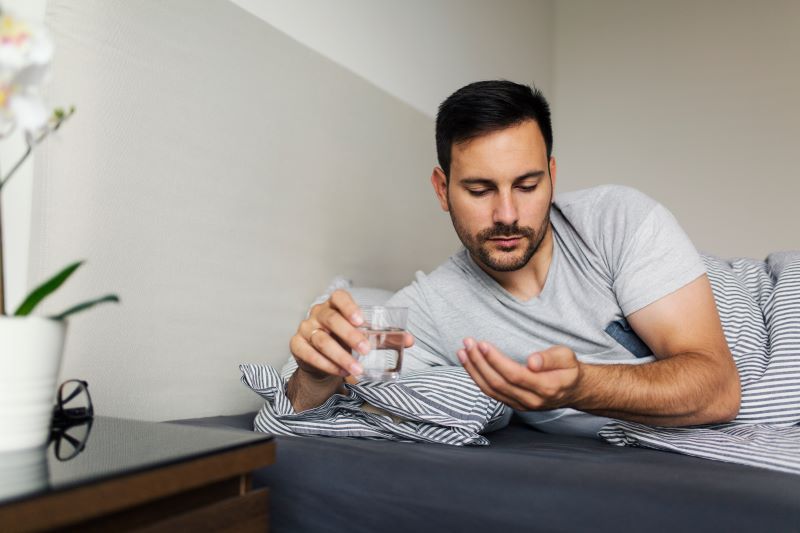
Mental health conditions such as depression, anxiety, and bipolar disorder are prevalent worldwide, and medications to treat these conditions can be life-changing for many individuals. However, these medications often come with side effects, some of which can impact sexual health of both men and women. Understanding these effects is the first step for patients and healthcare providers to managing and mitigating them effectively.
Common Medications and Their Impact
- Selective Serotonin Reuptake Inhibitors (SSRIs)
SSRIs, such as fluoxetine (Prozac), sertraline (Zoloft), and escitalopram (Lexapro), are commonly prescribed for depression and anxiety. These medications increase serotonin levels in the brain, which can improve mood. However, they are also known to cause sexual side effects. According to multiple scientific studies on the topic, between 25-73% of patients taking SSRIs report sexual dysfunction, which may include decreased libido, difficulty achieving orgasm, and erectile dysfunction (ED).
- Serotonin-Norepinephrine Reuptake Inhibitors (SNRIs)
SNRIs, like venlafaxine (Effexor) and duloxetine (Cymbalta), also treat depression and anxiety by affecting both serotonin and norepinephrine levels. The sexual side effects are similar to SSRIs and can include reduced genital sensation, reduced sexual desire, difficulty reaching orgasm, and ED.
- Antipsychotics
Antipsychotics are medications that are used to treat bipolar disorder and schizophrenia. These medications work by blocking certain dopamine and serotonin receptors. Second-generation or “atypical” antipsychotics also activate certain other dopamine and serotonin receptors, but first-generation antipsychotics do not. These medications can cause sexual side effects like decreased libido, ED, and amenorrhea (the absence of a menstrual period) in women.
Mechanisms Behind Sexual Dysfunction
The mechanisms through which these medications impact sexual health vary. For SSRIs and SNRIs, the increased serotonin can inhibit dopamine, a neurotransmitter involved in sexual arousal and pleasure. Additionally, these medications can affect nitric oxide levels, which are crucial for erectile function.
Antipsychotics’ impact on sexual health is often related to their effect on prolactin. Elevated prolactin can disrupt the normal function of reproductive hormones, leading to reduced sexual desire and performance.
Mitigating Sexual Side Effects
Addressing sexual side effects can involve several strategies:
- Medication Adjustment: If a medication is causing undesirable sexual side effects, switching to a different medication is one option. This can be accomplished through meeting with your doctor or health care provider to change your prescription. Importantly, it is not a good idea to suddenly stop taking your medication without consulting your clinician. Most mental health medications must gradually be reduced. Discontinuing the medication abruptly may lead to further unwanted side effects.
- Dosage Modification: Reducing the dosage of your current medication might alleviate sexual side effects without compromising the treatment’s effectiveness. This should always be done under the guidance of a healthcare provider.
- Addition of Medications: Adding medications that counteract sexual side effects, such as PDE5 inhibitors (e.g., sildenafil for erectile dysfunction), can be beneficial.
- Behavioral Interventions: Counseling and sex therapy can help address psychological aspects of sexual dysfunction, providing patients with strategies to cope with and overcome these challenges.
Conclusion
Medications for mental health conditions can significantly impact sexual health, which may affect one’s overall quality of life. Understanding these side effects and exploring strategies to manage them is essential for patients and healthcare providers. With appropriate management, it is possible to balance effective mental health treatment with a satisfying sexual life.
References:
Atmaca M. (2020). Selective Serotonin Reuptake Inhibitor-Induced Sexual Dysfunction: Current Management Perspectives. Neuropsychiatric disease and treatment, 16, 1043–1050. https://doi.org/10.2147/NDT.S185757
Clayton, A. H., Pradko, J. F., Croft, H. A., Montano, C. B., Leadbetter, R. A., Bolden-Watson, C., Bass, K. I., Donahue, R. M., Jamerson, B. D., & Metz, A. (2002). Prevalence of sexual dysfunction among newer antidepressants. The Journal of clinical psychiatry, 63(4), 357–366. https://doi.org/10.4088/jcp.v63n0414
Jing, E., & Straw-Wilson, K. (2016). Sexual dysfunction in selective serotonin reuptake inhibitors (SSRIs) and potential solutions: A narrative literature review. The mental health clinician, 6(4), 191–196. https://doi.org/10.9740/mhc.2016.07.191
Mayo Clinic. (n.d.). Serotonin and norepinephrine reuptake inhibitors (SNRIs). Mayo Clinic. Retrieved June 11, 2024, from https://www.mayoclinic.org/diseases-conditions/depression/in-depth/antidepressants/art-20044970
Montejo, Á. L., Majadas, S., Rico-Villademoros, F., Llorca, G., De La Gándara, J., Franco, M., Martín-Carrasco, M., Aguera, L., & Prieto, N., for the Spanish Working Group for the Study of Psychotropic-Related Sexual Dysfunction. (2010). Frequency of sexual dysfunction in patients with a psychotic disorder receiving antipsychotics. The Journal of Sexual Medicine, 7(10), 3404–3413. https://doi.org/10.1111/j.1743-6109.2010.01709.x
Rosen, R. C., Lane, R. M., & Menza, M. (1999). Effects of SSRIs on sexual function: a critical review. Journal of clinical psychopharmacology, 19(1), 67–85. https://doi.org/10.1097/00004714-199902000-00013
You may also be interested in...
SMSNA Patients
Do Physical and Psychological Health Impact Sexual Function in Women with Urinary Incontinence? Study Investigates
August 27, 2026Blog
Sexual Intrusive Thoughts
September 16, 2025Blog
Is Vaginal Dryness Only a Post-Menopausal Issue?
May 6, 2025Did You Know?
What Are Strategies for Overcoming Sexual Performance Anxiety?
March 18, 2025Did You Know?
What Does “Erotic Intelligence” Mean?
September 12, 2024Blog
Can Overthinking Lead to Orgasmic Dysfunction?
October 29, 2024Blog
Managing Mental Health and Sexual Health Simultaneously
September 17, 2024Other Popular Articles
What Is the Average Penis Size?
If you have ever wondered how your penis compares to others in terms of size, you are not alone. Many men are curious to know how their penises stack up compared to the average. Unfortunately, general curiosity can sometimes give way to full-on obsession and anxiety about penis size. This can be an unhealthy and often unnecessary fixation, especially because most men who think their penises are too small have perfectly normal-sized penises.

Can Sex Reduce Menstrual Cramps?
The SMSNA periodically receives and publishes ‘guest editorials.’ The current article was submitted by Mia Barnes, a freelance writer and researcher who specializes in women's health, wellness, and healthy living. She is the Founder and Editor-in-Chief of Body+Mind Magazine.
Having sex while you experience menstrual cramps is healthy and can provide significant benefits. While it might not be the first activity that comes to mind when your PMS or period cramping begins, many people enjoy sex to reduce menstrual cramps, experience increased pleasure and benefit from other advantages. Learn more about having sex while menstrual cramps are happening and how it can help your body.
What Is Sensate Focus and How Does It Work?
Sensate focus is a technique used to improve intimacy and communication between partners around sex, reduce sexual performance anxiety, and shift away from ingrained, goal-oriented sexual patterns that may not be serving a couple.
What Is Jelqing, and Does It Actually Work?
The term “jelqing” refers to a set of penis stretching exercises that some believe can make the penis bigger. Although the practice has gained attention and popularity in blogs and internet forums in recent years, there is no scientific evidence that it is an effective way to permanently increase the size of one’s penis. In fact, in some cases, jelqing may actually cause damage to the penis, so it is a good idea to get all the facts before setting off to try it.

How Long Does It Take the Average Man to Ejaculate?
On average, it takes a man between 5 to 7 minutes to orgasm and ejaculate during sexual intercourse.
Can Sex Throw off Your Vaginal pH Balance?
The SMSNA periodically receives and publishes ‘guest editorials.’ The current article was submitted by Mia Barnes, a freelance writer and researcher who specializes in women's health, wellness, and healthy living. She is the Founder and Editor-in-Chief of Body+Mind Magazine.
Your vagina is a pretty powerful organ. It is a pathway for menstrual blood and babies. It also is a main player in sexual intercourse. You might hear about your vagina’s pH and worry that yours is at risk. Here’s what to know about vaginal pH, including the impacts sex could have.
Attention: Restrictions on use of SMSNA content in third party applications, including artificial intelligence technologies, such as large language models and generative AI.
You are prohibited from using or uploading content you accessed through this website into external applications, bots, software, or websites, including those using artificial intelligence technologies and infrastructure, including deep learning, machine learning and large language models and generative AI.