What is the Female Orgasm? ISSWSH Presents an Updated Definition at the 27th Annual SMSNA Fall Scientific Meeting
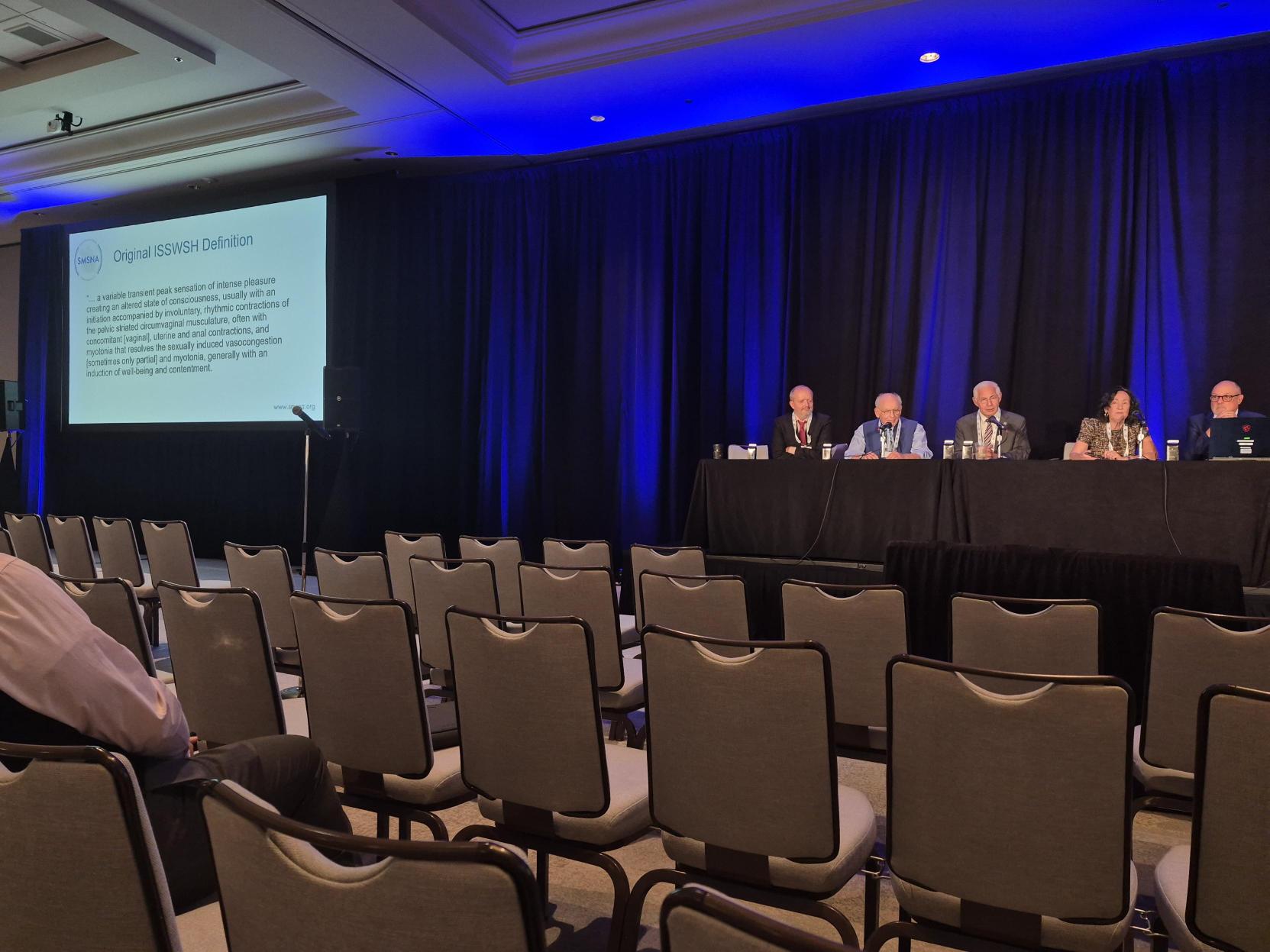
On Saturday, October 10, at the 27th Annual SMSNA Fall Scientific Meeting, Drs. Irwin Goldstein and Barry Komisaruk, along with Sue Goldstein, all members of the International Society for the Study of Women's Sexual Health (ISSWSH), presented a panel discussion on redefining orgasm. The panel explained that ISSWSH's original definition, which emphasized intense pleasure, did not fully account for the neurological and physiological processes involved in orgasm. Sue Goldstein explained that the updated ISSWSH definition recognizes three stages: pre-orgasm, orgasm, and post-orgasm. "Four years! It took us four years to get here," Dr. Irwin Goldstein remarked. However, the definition of female orgasmic disorder has not yet changed.
Dr. Komisaruk discussed the major sensory nerves connecting the genitals to the brain. The clitoris, cervix, and vagina project to overlapping regions of the brain's sensory cortex through different nerve pathways. He explained that women describe orgasms associated with these areas differently, with clitoral stimulation often producing more localized sensations and vaginal stimulation producing deeper sensations. Stimulation of multiple regions may contribute to a more intense orgasm. Interestingly, nipple stimulation also activates similar regions of the brain. Dr. Komisaruk noted that orgasm intensity may be related to muscle contraction intensity. Different areas of the brain become active at different times during orgasm, with activity subsiding shortly afterward. His research also suggests that excitation and inhibition occur together, with increased pain tolerance during orgasm. He described an "orgasm faucet model," in which different sources of stimulation can contribute to orgasm independently or simultaneously.
Dr. Irwin Goldstein explained how this understanding may help clinicians recognize six categories of female orgasmic dysfunction:
-
Excitation insufficiency: Difficulty becoming sufficiently aroused to reach orgasm. Potential treatments may include medications that affect dopamine or serotonin signaling.
-
Inhibition insufficiency: Difficulty regulating the inhibitory processes associated with orgasm, potentially involving pain. Treatments discussed included SSRIs, SNRIs, analgesics, and progesterone.
-
Delayed orgasm: Orgasm develops slowly or takes longer than desired to occur. Treatment may involve approaches to increase sensitivity.
-
Muted or prematurely muted orgasm: Arousal develops, but the orgasmic response is diminished or ends prematurely.
-
Anhedonic orgasm: Orgasm occurs without the expected sensation of pleasure, potentially following surgery. Medication may be considered depending on the underlying cause.
-
Post-orgasmic illness syndrome (POIS): Symptoms of illness following orgasm that may persist for an extended period. Dr. Goldstein discussed potential approaches involving psychotherapy and hormonal or neurotransmitter-related treatments.
Dr. Irwin Goldstein emphasized that a single definition or classification cannot fully capture the range of women's orgasmic experiences. He suggested that the traditional approach of placing women into one diagnostic category may eventually give way to more specific classifications that better reflect individual experiences.
Sue Goldstein noted that these concepts may also apply beyond women. All three panelists agreed that further research is needed to better understand orgasm and refine the classification of orgasmic disorders.
You may also be interested in...
Other Popular Articles

What Is the Average Penis Size?
If you have ever wondered how your penis compares to others in terms of size, you are not alone. Many men are curious to know how their penises stack up compared to the average. Unfortunately, general curiosity can sometimes give way to full-on obsession and anxiety about penis size. This can be an unhealthy and often unnecessary fixation, especially because most men who think their penises are too small have perfectly normal-sized penises.
Can Sex Reduce Menstrual Cramps?
The SMSNA periodically receives and publishes ‘guest editorials.’ The current article was submitted by Mia Barnes, a freelance writer and researcher who specializes in women's health, wellness, and healthy living. She is the Founder and Editor-in-Chief of Body+Mind Magazine.
Having sex while you experience menstrual cramps is healthy and can provide significant benefits. While it might not be the first activity that comes to mind when your PMS or period cramping begins, many people enjoy sex to reduce menstrual cramps, experience increased pleasure and benefit from other advantages. Learn more about having sex while menstrual cramps are happening and how it can help your body.

What Is Sensate Focus and How Does It Work?
Sensate focus is a technique used to improve intimacy and communication between partners around sex, reduce sexual performance anxiety, and shift away from ingrained, goal-oriented sexual patterns that may not be serving a couple.

What Is Jelqing, and Does It Actually Work?
The term “jelqing” refers to a set of penis stretching exercises that some believe can make the penis bigger. Although the practice has gained attention and popularity in blogs and internet forums in recent years, there is no scientific evidence that it is an effective way to permanently increase the size of one’s penis. In fact, in some cases, jelqing may actually cause damage to the penis, so it is a good idea to get all the facts before setting off to try it.

How Long Does It Take the Average Man to Ejaculate?
On average, it takes a man between 5 to 7 minutes to orgasm and ejaculate during sexual intercourse.
Can Sex Throw off Your Vaginal pH Balance?
The SMSNA periodically receives and publishes ‘guest editorials.’ The current article was submitted by Mia Barnes, a freelance writer and researcher who specializes in women's health, wellness, and healthy living. She is the Founder and Editor-in-Chief of Body+Mind Magazine.
Your vagina is a pretty powerful organ. It is a pathway for menstrual blood and babies. It also is a main player in sexual intercourse. You might hear about your vagina’s pH and worry that yours is at risk. Here’s what to know about vaginal pH, including the impacts sex could have.
Attention: Restrictions on use of SMSNA content in third party applications, including artificial intelligence technologies, such as large language models and generative AI.
You are prohibited from using or uploading content you accessed through this website into external applications, bots, software, or websites, including those using artificial intelligence technologies and infrastructure, including deep learning, machine learning and large language models and generative AI.
Subscribe for our Newsletter!